 Official website
Ingredient research
Alpha Lipoic Acid: What the Research Shows, and Where Neuralisse Fits
Most nerve trials of alpha lipoic acid used 600 mg a day. A 2023 meta-analysis of 10 trials found lower total symptom scores in people with diabetes, but no clear change in pain scales or nerve tests (Hsieh 2023, oral ALA meta-analysis). Neuralisse lists ALA second in a 575 mg blend, so each capsule holds at most about 175 mg, best case.
Written by the Goneuralisse editorial teamUpdated · 9 min read

The basics
What is alpha lipoic acid?
Alpha lipoic acid (ALA), also called thioctic acid, is a sulfur-containing compound your body makes in small amounts. It helps enzymes in the cell's power plants turn food into energy, and it acts as an antioxidant.
The alpha lipoic acid ingredient page covers the basics. Researchers became interested in ALA for nerve symptoms because high blood sugar creates oxidative stress, and ALA can soak up some of those reactive molecules.
In Neuralisse, alpha lipoic acid is the second ingredient in the 575 mg proprietary blend, right after magnesium glycinate. The label gives no separate amount for it.
Hsieh 2023
What did the 2023 meta-analysis of oral ALA find?
The 2023 review by Hsieh and colleagues pooled 10 randomized trials with 1,242 people who had diabetic nerve problems. Oral ALA lowered total symptom scores compared with placebo (Hsieh 2023, oral ALA meta-analysis).
The same review found no significant benefit on three harder measures: a pain scale, vibration sense and nerve conduction tests. Seven of the 10 trials used 600 mg a day. The authors pointed to few studies, mixed designs and small samples as limits.
| Study | Who and how long | Dose | Main finding |
|---|---|---|---|
| Hsieh 2023 meta-analysis (Hsieh 2023, oral ALA meta-analysis) | 10 trials, 1,242 people with diabetes | Mostly 600 mg a day | Lower total symptom scores; no clear change in pain scale, vibration or nerve tests |
| SYDNEY 2, 2006 (SYDNEY 2 trial) | 181 people, 5 weeks | 600, 1,200 or 1,800 mg once daily | Symptom scores fell 51%, 48% and 52% vs 32% on placebo |
| 4-year trial (LPI, Lipoic acid) | 421 people, 4 years | 600 mg a day | Did not beat placebo on its main goal |
| Health Canada review, 2017 (Health Canada, ALA hypoglycemia) | Safety reports | Oral ALA | Rare insulin autoimmune syndrome in predisposed people |
A symptom score is a questionnaire. People rate burning, stabbing pain, numbness and prickling. Scores can also move with expectation, so placebo groups improve too.
SYDNEY 2
What did the SYDNEY 2 trial show about ALA doses?
SYDNEY 2 tested three daily doses for 5 weeks in 181 people with diabetes and nerve symptoms. Total symptom scores fell by 51% on 600 mg, 48% on 1,200 mg and 52% on 1,800 mg, compared with 32% on placebo (SYDNEY 2 trial).
Two points stand out. First, the placebo group improved a lot, so the real difference was about 16 to 20 percentage points. Second, higher doses did not work better. They only brought more nausea, vomiting and dizziness.
The authors judged 600 mg once a day to be the best balance of benefit and side effects. It became the standard dose in later trials.
Long term
Does alpha lipoic acid help over the long term?
The longest test so far is not encouraging. A 4-year trial gave 600 mg a day to 421 people with diabetic nerve problems, and it did not beat placebo on its main goal (LPI, Lipoic acid).
Timing also matters. Taking ALA with food lowers its peak blood level by about 30% (LPI, Lipoic acid). A capsule taken with a meal may reach lower levels than the trial numbers suggest.
Safety
Is alpha lipoic acid safe?
For most adults, ALA at study doses causes mild side effects at most. Memorial Sloan Kettering lists low blood sugar, nausea, vomiting and indigestion as the reported effects (MSKCC, Alpha-lipoic acid).
The main concern is blood sugar. ALA may improve how the body uses glucose, so it can add to insulin or diabetes pills (LPI, Lipoic acid).
Talk to your doctor before taking any product with alpha lipoic acid, and check your blood sugar more often at first. Shakiness, sweating, confusion or a racing heart can mean low blood sugar. The full list of cautions is on our side effects page.

Give Neuralisse a 60-day trial1 capsule a day · from $49 a bottle · free U.S. shipping on 3 or 6 bottles
Order nowHealth Canada
What did Health Canada's alpha lipoic acid review conclude?
In 2017, Health Canada reviewed reports of low blood sugar linked to ALA. It concluded that oral alpha lipoic acid may cause insulin autoimmune syndrome in people with a certain genetic makeup (Health Canada, ALA hypoglycemia).
In this rare condition, the body makes antibodies to its own insulin. Blood sugar can then swing low, sometimes hours after a meal. About 27 cases have been reported, mostly in Japan, where the gene type is more common (MSKCC, Alpha-lipoic acid).
The effect appeared rare, and it went away when people stopped the product (Health Canada, ALA hypoglycemia). If you have unexplained low blood sugar episodes while taking any ALA supplement, stop it and tell your doctor about it by name.
Blend math
How much alpha lipoic acid is in Neuralisse?
Each capsule holds at most about 175 mg of alpha lipoic acid, and that is the best case. The label prints only the 575 mg blend total, with ingredients listed from most to least by weight (FDA, Labeling guide ch. IV).
The 80 mg of magnesium on the Supplement Facts panel must come from magnesium glycinate, which uses up about 400 to 567 mg of the blend. The rest is shared by five ingredients, and ALA is the heaviest of them.
- 575 mg
The whole proprietary blend in one capsule. The label lists six ingredients, heaviest first (FDA, Labeling guide ch. IV).
- 400-567 mg
The 80 mg of magnesium on the label has to come from magnesium glycinate. Pure magnesium bisglycinate is about 14% magnesium (24.3 / 172.4), so it takes about 567 mg. Buffered forms near 20% magnesium take about 400 mg.
- 8-175 mg
What is left for the other five ingredients together. Because they are listed by weight, the second one can be at most half of that, the third a third, and so on.
The most each ingredient can weigh per capsule
- Alpha lipoic acid≤ 175 mg
- Butcher's broom≤ 87 mg
- L-carnitine≤ 58 mg
- Turmeric≤ 43 mg
- Coenzyme Q10≤ 35 mg
Best case: the lighter, 20%-magnesium form of glycinate. If the glycinate is pure bisglycinate, all five share about 8 mg. The label does not say which form is used.
If the glycinate is the pure form, the five ingredients share only about 8 mg. The label does not say which form is used, so the true amount sits somewhere between those two numbers.
Compared
How does Neuralisse compare with the ALA doses used in trials?
Even in the best case, one capsule gives about 29% of the 600 mg dose used in most trials. No published trial has tested Neuralisse itself, and no trial we know of tested 175 mg of ALA for nerve symptoms.
Bottom line
What is the takeaway on alpha lipoic acid?
At 600 mg, ALA lowered symptom scores in short trials but not pain scales, nerve tests or a 4-year goal. Neuralisse holds at most about 175 mg per capsule. Numbness or burning in the feet needs a doctor first; the nerve health guide covers the common causes.
FAQ
Alpha lipoic acid FAQ
How much alpha lipoic acid is in Neuralisse?
The label does not print an amount. Alpha lipoic acid is second in a 575 mg blend after magnesium glycinate, which takes about 400 to 567 mg. That leaves at most about 175 mg for ALA in the best case, and possibly far less.
What dose of alpha lipoic acid was used in nerve studies?
Most trials used 600 mg a day. In the SYDNEY 2 trial, 600 mg worked as well as 1,200 or 1,800 mg over 5 weeks, with fewer side effects, so researchers settled on 600 mg once daily as the standard dose.
Does alpha lipoic acid help diabetic nerve symptoms?
Short trials found lower symptom scores than placebo. A 2023 meta-analysis of 10 trials found no clear change in pain scales, vibration sense or nerve tests, and a 4-year trial at 600 mg missed its main goal. The evidence is mixed.
Can alpha lipoic acid lower blood sugar too much?
It can. ALA may add to the effect of insulin and diabetes pills, so blood sugar can drop. Rarely, it triggers insulin autoimmune syndrome in people with a certain gene type. Anyone on diabetes medicine should ask a doctor first and monitor closely.
What are the side effects of alpha lipoic acid?
Reported side effects include nausea, vomiting, indigestion and low blood sugar. In SYDNEY 2, nausea, vomiting and dizziness rose as the dose climbed from 600 to 1,800 mg. A rare autoimmune reaction to insulin has been reported, mostly in Japan.
Is 175 mg of alpha lipoic acid enough?
No trial we know of has tested 175 mg of ALA for nerve symptoms, so nobody can say. It is about 29% of the 600 mg trial dose, and that 175 mg figure is the best case the Neuralisse label allows.
Who wrote this
Written and reviewed by
A small team that reads the bottle label line by line, checks every number against public health sources (NIH, NCCIH, MSKCC, FDA, FTC, CDC) and rewrites it in plain English. We do not write for the manufacturer, and we update a page whenever the label, the prices or the evidence changes.
Last updated . See our editorial standards and how we check reviews. This website is run by a U.S. authorized merchant, not by the manufacturer. This site is paid a commission when you buy through its order links.
Keep reading
More about Neuralisse
Alpha lipoic acid
Second in the blend: at most about 175 mg, versus 600 mg in most trials, plus the blood sugar caution.
Read more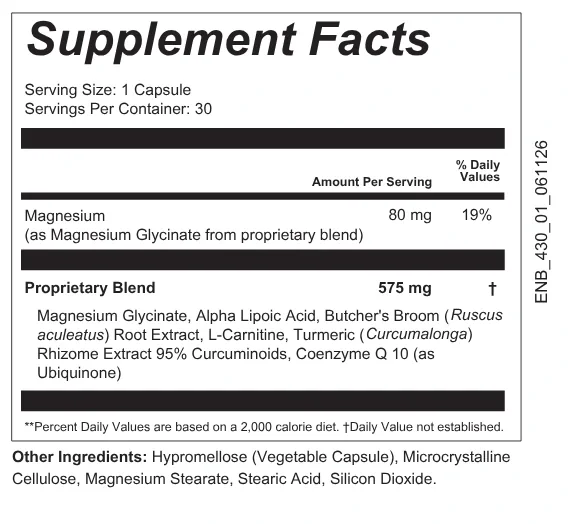
Side effects
Side effects by ingredient, who should skip Neuralisse, and the warning signs that mean stop and call a doctor.
Read moreMagnesium glycinate explained
Why glycinate is only about 14% magnesium, how 80 mg compares with daily limits, and who should be careful.
Read moreU.S. authorized Neuralisse merchant
Ready to try Neuralisse?
Pick a pack. At one capsule a day, even the smallest pack covers the full 60-day money-back window.
- Secure checkout
- 60-day money-back guarantee
- Ships from the U.S.